DEMETER CERTIFICATION
How to become Demeter Certified
In order to go for Demeter certification the farm needs to be certified organic by an EU approved certification body (BDAASA recommends ECOCERT as they also do Demeter audits)
Find a Demeter advisor to help with the conversion and do the conversion plan. Wendy Lilje is the advisor in SA –
info@bloublommetjieskloof.com. The advisor will submit the application and conversion plan and on approval by BFDI, the conversion period starts
Once conversion is complete then the farm can contact the certification body to schedule an audit

Contact us for more info on Demeter Certification
Demeter Certified SA Farms
There are currently only three Demeter Certified Farms in South Africa, Bloublommetjieskloof Biodynamic Farm, Reyneke Farm and Wupperthal Original Rooibos Cooperative
Bloublommetjieskloof Biodynamic Farm
At the Heart of South Africa’s BD Farming Movement
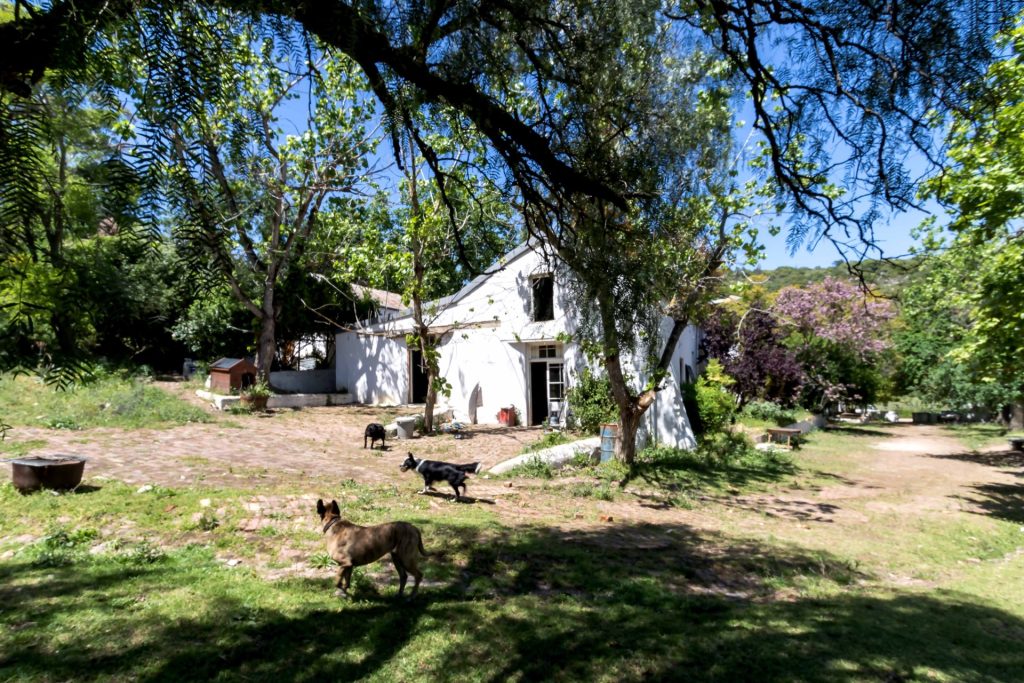
South Africa’s first Biodynamic farm – Bloublommetjieskloof in the Western Cape – continues to play a significant role in terms of supporting the BD movement in South Africa.
Bloublommetjieskloof was bought by Jeanne Malherbe, the pioneer of BD farming in this country back in the sixties, when she returned to South Africa after completing the BD Agricultural Course at Emerson College in the UK. Jeanne then began the process of converting the farm to BD and sharing her wisdom at a time when even organic farming was regarded with suspicion. Despite the challenges, she created a platform for the growth of BD, including:
- establishing the famous Rondebosch Farmers Market, where she sold her produce,
- making BD preps for sale to other farmers, and
- hosting workshops and school groups on the farm, creating interest in BD farming.
Approximately thirty-five years later in 2000, Jeanne sold the farm to Wendy Lilje, who continues Jeanne’s work and had the farm Demeter certified in 2005.
“I came to know about Jeanne and her farm while working for Pharma Natura, a company that produced the Weleda and Wala range of anthroposophical medicines, and the Dr Hauschka cosmetics. I took over from Jeanne years later when she was physically no longer able to work.”
Proving it’s possible to farm to Demeter Standards
“The farm presented me with lots of challenges having no experience of farming. My field of study and work life thus far had been in the phyto-pharmaceutical field, having studied Botany and Microbiology.
“When I took over Bloublommetjieskloof, I added a soap production facility to the mix, while taking on the running of the farm that produced vegetables, herbs, fruit, olives as well as farming cattle, dairy cows, horses, pigs and chickens. We also continued to run BD farming workshops, make preps for sale and host school groups.
“I had no formal farming training, so I had to learn from others, including Jeanne, who was still living on the farm. Much, I must admit, I learned through trial and error,” said Wendy.
Setting the bar high
“I am passionate about biodynamics and find the concepts so self-evident that it is often inconceivable to me that farmers can still farm conventionally.
“However, because biodynamics and Demeter certification are not yet that well-known in South Africa, and it is difficult to charge a premium for produce, farmers have been slow to join the movement. I was determined to prove that it was possible to farm to Demeter standards and be viable as a Demeter certified producer in this country.”
“Like all farms, Bloublommetjieskloof has had its ups and downs, but does, I think serve as a model for a working small BD mixed farm, in the same way that Reyneke Wines serves as a model for a viable large-scale commercial BD farm.”
Until recently, Bloublommetjieskloof was the only farm producing the BD preparations. Wendy, as a board member of BDAASA holding the mandate for BD Preparations and Demeter, has been actively supporting other farmers to also make the Preparations, to meet the demand as the movement gains traction countrywide.
The school camps that take place at Bloublommetjieskloof also play an important role by planting seeds in curious young minds. The children love the camps and take their memories and interest in BD farming back with them.




Reyneke Farm
South Africa’s First Demeter-Certified Wine Farm
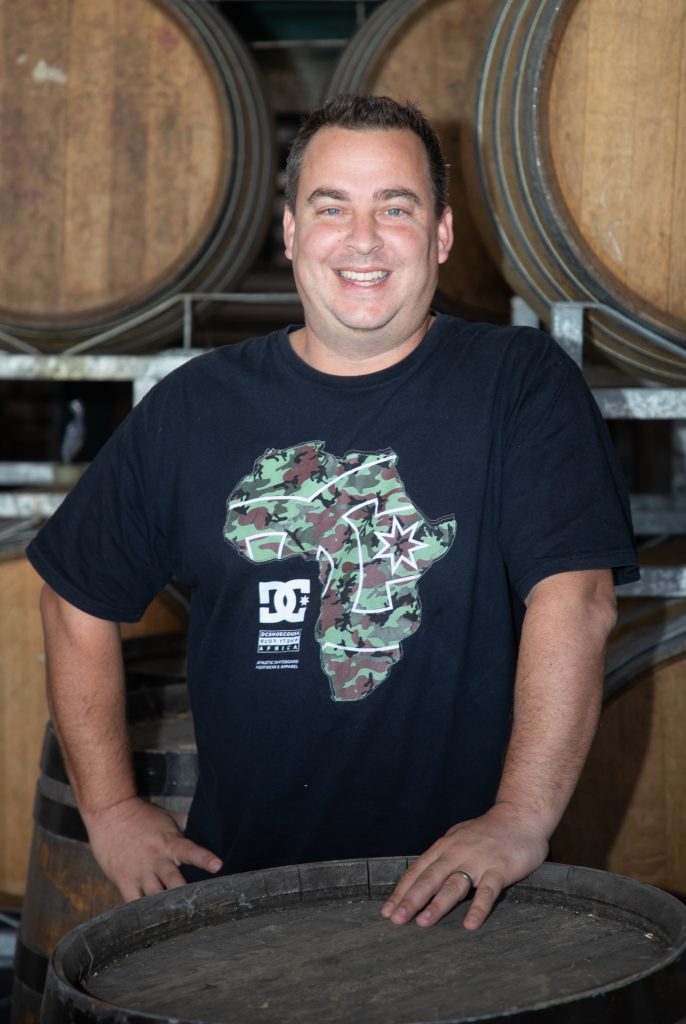
Johan Reyneke shares the 23-year journey he has been on and the process of conversion of the farm Uitzicht in the Western Cape, established in 1863, into a successful, biodynamic enterprise exporting organic wines to 43 countries worldwide.
In 2000 I converted a small portion of the vineyard to organic. I was struggling with it and Jeanne Malherbe, a pioneer of biodynamic farming in South Africa, helped me get the organic system right before introducing me to biodynamics.
The biggest move away from conventional farming was converting the farm into a self-sufficient organism – not overly reliant on external inputs. Jeanne helped me align different organic systems in a way that allowed them to feed off each other. For example, I used to farm grapes only. I then introduced a herd of cows so I could use the waste from the cows in the compost to feed the grapes and the cellar waste from the winemaking to feed the cows.
The application of BD compost was the key that unlocked the potential of the farm as the soil became healthy and alive. After that, I began using Prep 500 and the cow pats to help bring back humus to the soil which was old and extensively weathered.
Help from the Experts
When we first converted the farm, our yields dropped initially. There were two reasons for this. Firstly, we didn’t understand what we were doing so we made some mistakes and secondly, we had to build up the soil health before we could reap the benefits. When you start something new, it’s always a learning curve. I was lucky to work with some great people who were passionate, willing to share their knowledge and at the same time let me figure out my own way, learning by trial and error.
Georg Meissner, who was studying and teaching at Geisenheim University in Germany, came and stayed on the farm for a year in 2003/4 and helped with the farming and winemaking. While Jeanne gave me a deep understanding of the essence of BD, Georg helped translate it into viticulture and winemaking.
Reaping the Benefits
Farming is now a lot cheaper as I don’t have to buy inputs like herbicides, fungicides, fertilizers, etc.
23 years later we have better quality produce at a fraction of the production costs and what began with the soil extends to the diversity of wildlife the farm attracts.
Having Demeter-certification has taken the risk out of the marketplace. We are working harder on the farm, but it is easier or us to sell our wines – 80% of which are exported.
Success takes Teamwork
Running a farm successfully takes multiple skill sets. It’s not just about production methods. You have to know how to work with people and how to run a business. Jeanne taught me to understand the difference between the commercial and inherent value of things, such as the contribution made by the people on the farm. People like to work where they are valued and where they have influence in their sphere of responsibility.
I got good advice long ago to surround myself with people who were better than me. My farmer, Ishaan Lilje is a better farmer than me, my winemaker, Barbara Melck is a better winemaker than me and my export department are better marketers than me!
Consumer demand is driving the move towards sustainably produced products and will ultimately force producers to move from conventional farming to BD and other forms of regenerative farming.
I believe the Demeter Participatory Guarantee System (PGS) is a great way to promote BD, helping farmers take the leap of faith, while receiving advice, support and encouragement from others on the BD journey.




Wupperthal Original Rooibos Cooperative
The world’s only Demeter-certified rooibos
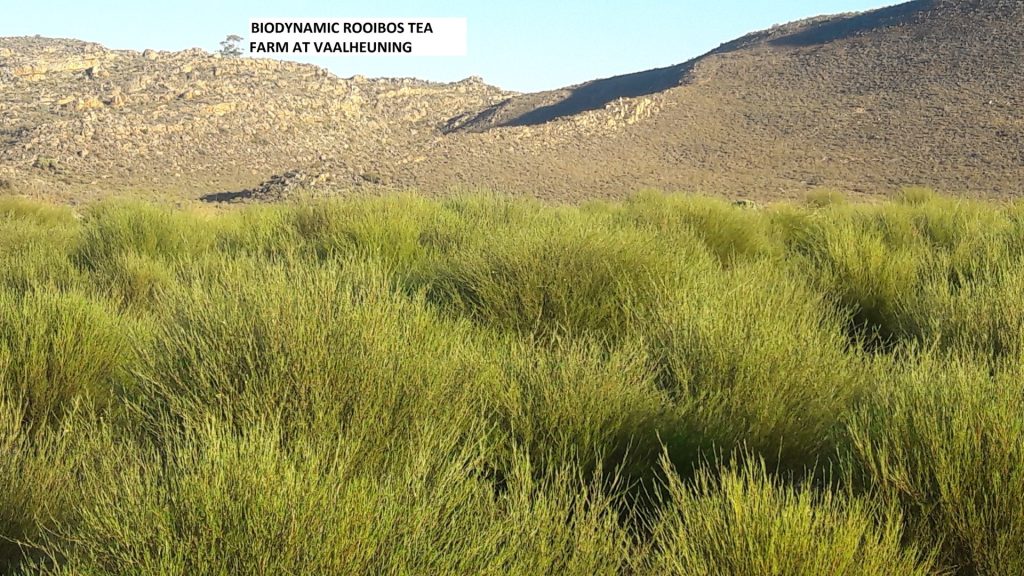
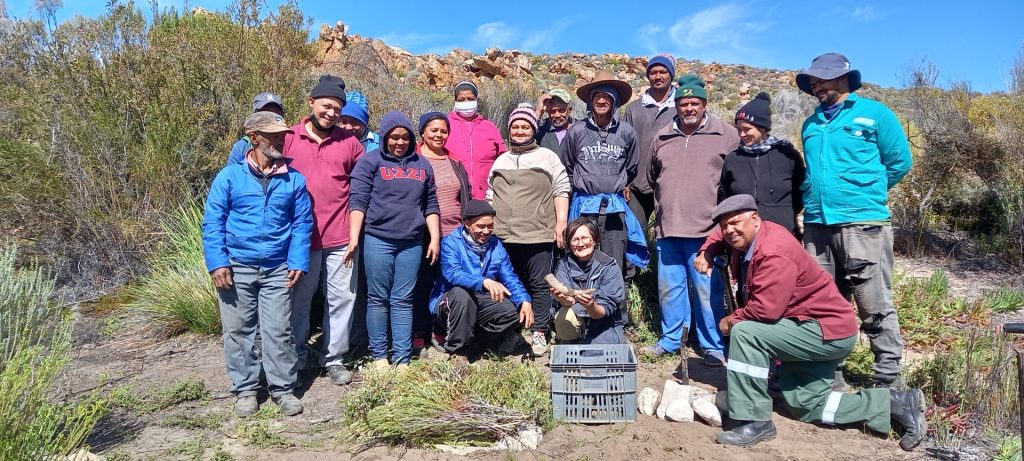
The world’s only Demeter certified rooibos in the world is cultivated in Wupperthal in the Cederberg mountains. While rooibos is endemic to this very small part of the Western Cape and has been harvested by Khoisan descendants for over 200 years, it has only been cultivated here since the 1990s.
Barend Salomo, CEO and farmer of Wupperthal Rooibos, tells us about the growth and development of rooibos farming in this remote area, where BD practices are creating much excitement as the co-operative’s farmers witness the ongoing transformation of their plots of land.
“Wupperthal Rooibos consists of 36000 ha of land that is registered as belonging to the Moravian Church of South Africa, who the community regards as the custodian while they fight for land rights.
Only 7% of this rocky terrain is used for agriculture, the rest is used for grazing. The community consists of 3700 people, living in 15 villages spread across the area, 25% of whom stay at the main station called Wupperthal. The main station was originally known as “Rietmond” before the missionaries came here in the 1800s and changed it to Wupperthal after the Wupper river in Germany. I feel sad that we lost the Khoi name which bore reference to it being “rich in water and fertile soil”.
While my ancestors had farmed wild rooibos for generations, I started cultivating rooibos on the piece of land I lease from the church in 1998.
Going BD to meet overseas market demand
I was introduced to biodynamic farming by one of our clients, Arlette Rohmer, owner of Les Jardins de Gaia, based in France. She explained the basic methodology and it made perfect sense for us to look into it. We could see the connection, particularly as rooibos originally grew wild here. In fact, this is home to the highest wild rooibos population in the whole rooibos production area in South Africa.
Over the years Arlette encouraged us to work towards Demeter certification, however, as it would be a group certification, our challenge was to get the buy-in of all the members.
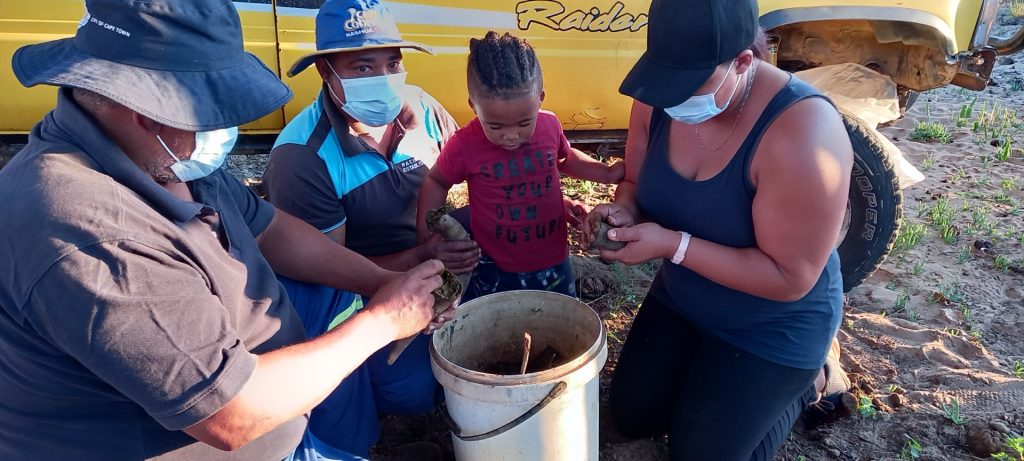
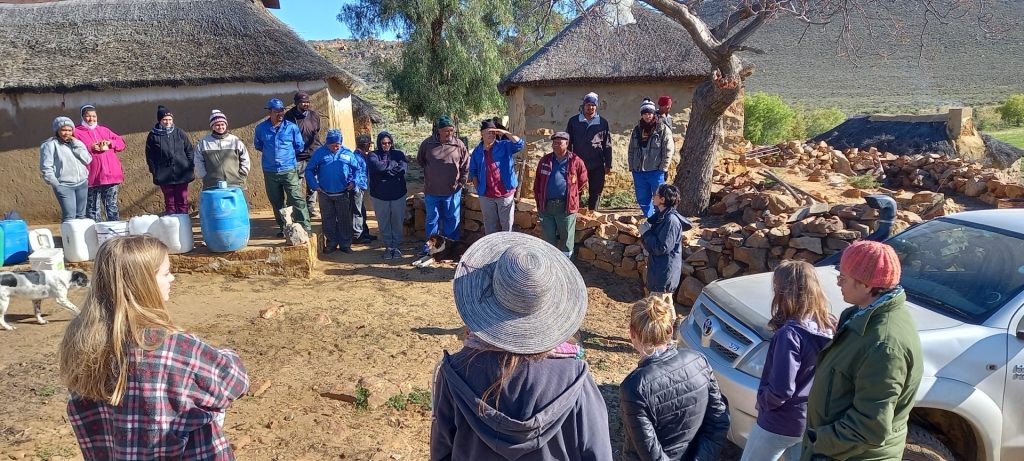
Wendy Lilje of BDAASA was instrumental – training our farmers and teaching us how to work with the BD preps.
Seeing is believing
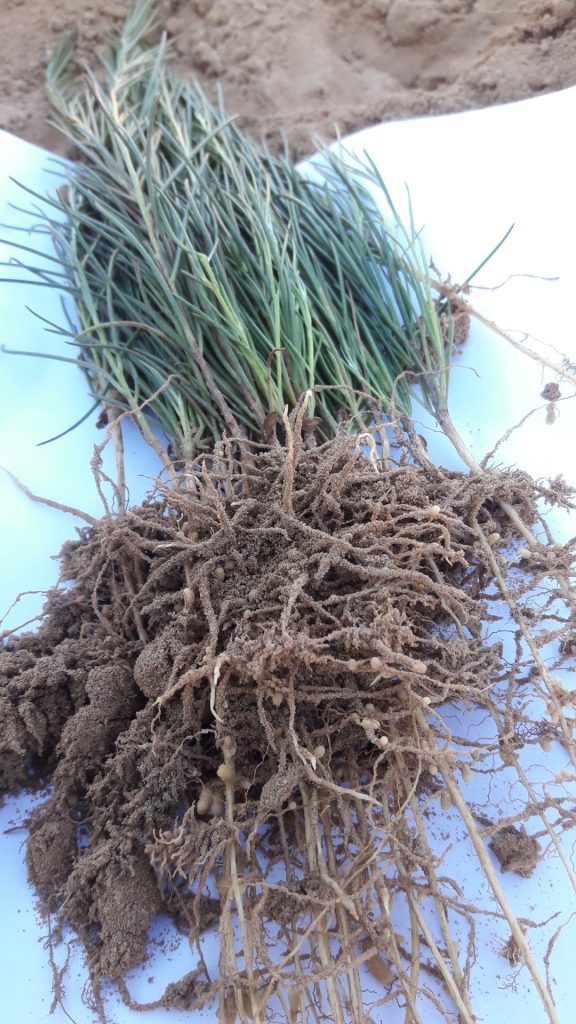
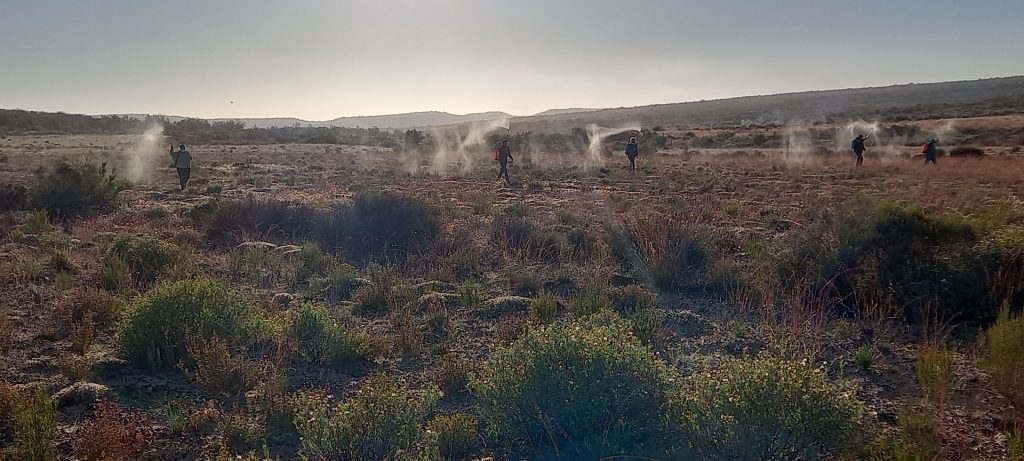
We began using Preps 500 and 501 and could see how their use was bringing the land back into balance. While we might not have been able to fully understand how BD worked, the evidence was before our eyes.
In 2019 we applied for Demeter certification and fortunately met the standard. While only a portion of our rooibos agricultural land is Demeter certified (25 members -111 ha out of 77 members – 226 ha), we apply Preps 500 and 501 to all our rooibos farming areas.
Now that we as a community are experiencing the benefits of farming in harmony with the rhythm of nature, we are all on the same page and working together to enhance the resilience of our land, particularly in the face of climate change.
Following the floods in our area in June 2023 which stripped the preps from our soil, we have been applying Preps 500 and 501, produced by ourselves, to restore the balance.
Currently 100% of our production (4 tonnes) of Demeter certified rooibos goes to France, but for the past few years we have been busy with a plan to increase our production that will see our volume double in the next three to four years.
We are grateful for the ongoing support of BDAASA. As we continue to learn about BD farming, we are improving not only the quality of our product, but the quality of life of our community.”